


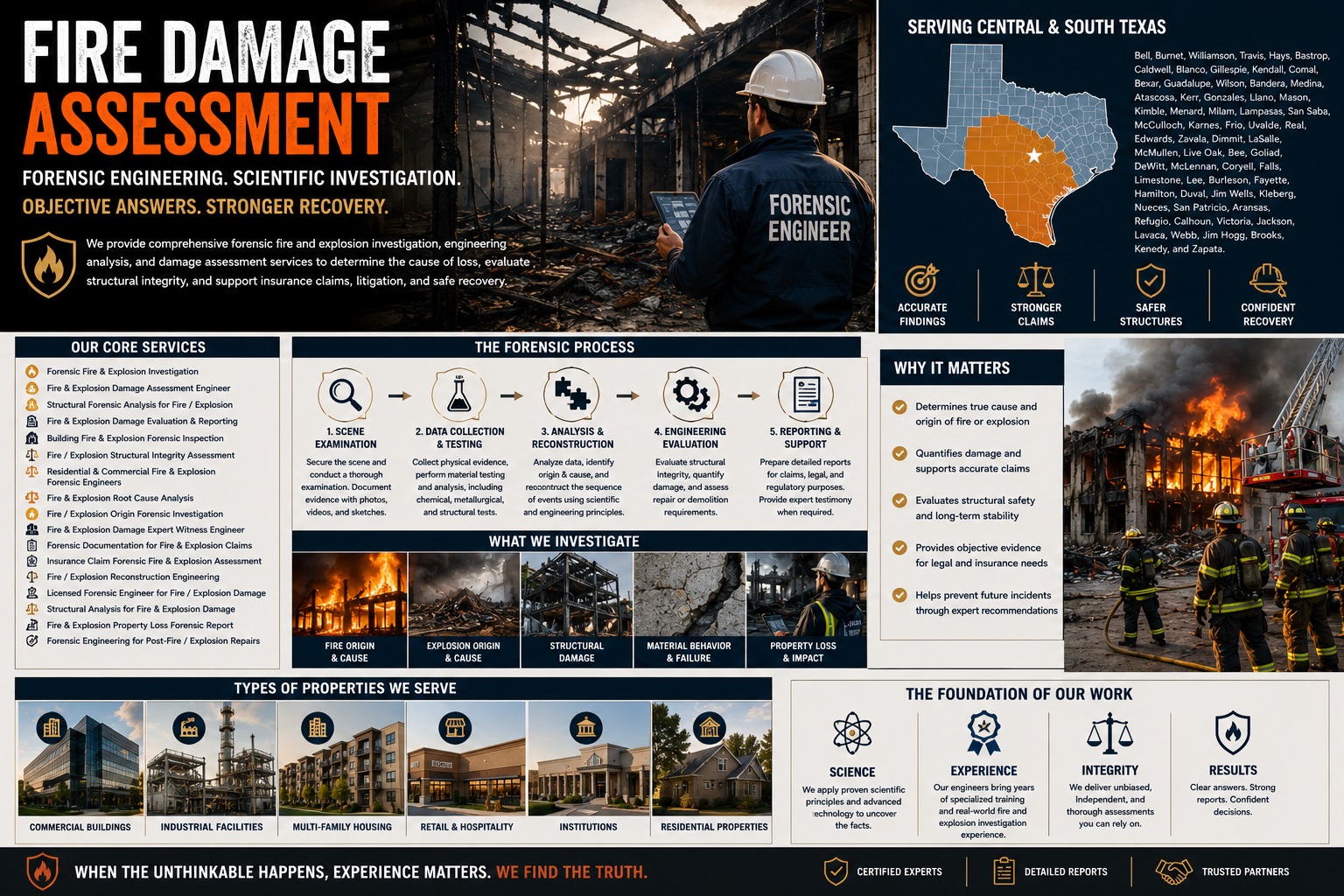
Fire and explosion incidents, whether accidental or intentional, inflict devastating consequences on property, lives, and livelihoods. The aftermath of such events necessitates a rigorous and systematic approach to understanding the extent of damage, identifying the cause, and facilitating recovery. This is the domain of forensic fire and explosion investigation, a specialized field that employs scientific principles and meticulous methodologies to reconstruct events and provide objective assessments. At its core, fire damage assessment is a multifaceted process that goes beyond simply documenting visible destruction. It involves a deep dive into the physical evidence, the behavior of materials under extreme thermal stress, and the dynamics of fire and explosion propagation. This comprehensive evaluation is crucial for a multitude of stakeholders, including property owners, insurance companies, legal professionals, and regulatory bodies, all of whom rely on accurate and impartial reports to make informed decisions regarding claims, litigation, and preventative measures.
The services encompassed within fire damage assessment are extensive and highly specialized. They include forensic fire and explosion investigation, where trained professionals meticulously examine fire scenes to determine the origin and cause of the incident. This often involves the work of a fire and explosion damage assessment engineer, whose expertise lies in quantifying the physical and economic losses incurred. Structural forensic analysis for fire/explosion is another critical component, focusing on the integrity of buildings and infrastructure after such events. Forensic engineers specializing in fire or explosion damaged structures are tasked with evaluating the long-term safety and stability of affected elements, often identifying hidden vulnerabilities that might not be apparent to the untrained eye.
The process extends to fire and explosion damage evaluation and reporting, where findings are documented in detailed reports that serve as foundational evidence. Building fire and explosion forensic inspection is a hands-on activity, involving on-site examinations of residential and commercial properties. The fire/explosion structural integrity assessment is paramount, ensuring that damaged buildings can be safely repaired or, if necessary, demolished. Residential and commercial fire and explosion forensic engineers bring specific knowledge to their respective domains, understanding the unique challenges and building codes associated with each.
A fundamental aspect of this field is fire and explosion root cause analysis, which aims to uncover the initiating event and contributing factors. This is closely linked to fire/explosion origin forensic investigation, where the exact starting point of the fire or explosion is pinpointed. The fire and explosion damage expert witness engineer plays a vital role in legal proceedings, offering professional testimony based on their findings. Forensic documentation for fire and explosion claims is essential for substantiating insurance claims, ensuring that losses are accurately represented. Insurance claim forensic fire and explosion assessment involves working closely with insurers to expedite the claims process based on objective findings. Fire/explosion reconstruction engineering might be employed to recreate the sequence of events, aiding in understanding complex scenarios. A licensed forensic engineer for fire/explosion damage provides the necessary credentials and legal standing for the assessments conducted. Structural analysis for fire and explosion damage is a technical discipline focused on the load-bearing capabilities of damaged components. The fire and explosion property loss forensic report summarizes all findings and economic valuations. Finally, forensic engineering for post-fire/explosion repairs guides the restoration process, ensuring that repairs are conducted safely and effectively.
The geographical scope of these services is also a critical consideration. This essay will specifically focus on the provision of these services within a defined region, encompassing a multitude of counties in Texas, including Bell, Burnet, Williamson, Travis, Hays, Bastrop, Caldwell, Blanco, Gillespie, Kendall, Comal, Bexar, Guadalupe, Wilson, Bandera, Medina, Atascosa, Kerr, Gonzales, Llano, Mason, Kimble, Menard, Milam, Lampasas, San Saba, McCulloch, Karnes, Frio, Uvalde, Real, Edwards, Zavala, Dimmit, LaSalle, McMullen, Live Oak, Bee, Goliad, DeWitt, McLennan, Coryell, Falls, Limestone, Lee, Burleson, Fayette, Hamilton, Duval, Jim Wells, Kleberg, Nueces, San Patricio, Aransas, Refugio, Calhoun, Victoria, Jackson, Lavaca, Webb, Jim Hogg, Brooks, Kenedy, and Zapata. This extensive region highlights the broad demand for specialized forensic engineering services across diverse urban, suburban, and rural landscapes, each presenting unique challenges and requiring localized knowledge of building types, materials, and regulatory frameworks.
The Scientific Foundation of Fire and Explosion Investigation
The effectiveness of fire damage assessment hinges on a robust scientific methodology. Forensic fire and explosion investigators are trained to approach a scene with a systematic mindset, recognizing that fire and explosions alter evidence in predictable ways. This process begins with a thorough site assessment, involving detailed photography, videography, and sketching of the scene before any significant disturbance. Investigators look for patterns of burn, charring, and spalling, which can indicate the intensity and duration of the fire or the direction of an explosion. The concept of heat transfer, including conduction, convection, and radiation, is fundamental to understanding how fire spreads and damages materials. For instance, the depth and nature of charring on wooden structures can help determine the location of the fire’s origin.
In explosion investigations, the focus shifts to blast effects. Investigators analyze damage patterns such as cratering, fragmentation dispersal, and structural deformation. The physics of blast waves, including overpressure and impulse, are critical in determining the type and proximity of the explosive device. Understanding the properties of different materials under extreme heat and pressure is also crucial. For example, the way concrete spalls or steel deforms under fire conditions provides valuable clues about the event’s progression. The science of combustion, including the fire tetrahedron (fuel, oxygen, heat, and an uninhibited chemical chain reaction), is central to determining how a fire started and sustained itself.
The principle of “last point of initation” is a cornerstone of origin and cause determination. Investigators work backward from the areas of most severe damage, looking for evidence that suggests the initial ignition. This might involve identifying the remains of an accelerant, a faulty electrical device, or a mechanical failure. For explosions, identifying the seat of the blast, where the explosion initiated, is paramount. This often involves analyzing debris patterns and fragmentation. The use of specialized tools and techniques, such as thermal imaging cameras, chemical testing kits, and advanced analytical software, further enhances the ability to collect and interpret evidence. The role of the fire and explosion damage assessment engineer in this phase is to translate these physical findings into quantitative measures of damage and loss, applying engineering principles to understand the structural and material performance under duress.
Structural Integrity and Forensic Analysis
One of the most critical aspects of fire and explosion damage assessment is evaluating the structural integrity of affected buildings and infrastructure. Fires and explosions can compromise the load-bearing capacity of structural elements in ways that are not always immediately apparent. A forensic engineer for fire-damaged structures or explosion-damaged structures must possess a deep understanding of material science and structural mechanics. When steel is exposed to high temperatures, it loses its strength and stiffness, leading to potential collapse. Concrete can spall or crack due to thermal expansion and the rapid heating of moisture within it, reducing its structural capacity. Masonry structures can experience similar degradation.
The process of structural forensic analysis for fire/explosion involves a detailed examination of the building’s structural system. This includes assessing the condition of beams, columns, slabs, walls, and foundations. The extent of charring on timber elements, the deformation of steel members, and the cracking or spalling of concrete are all indicators of the severity of thermal or blast loading. Engineers often use visual inspection, non-destructive testing methods (such as ultrasonic testing or rebound hammer tests for concrete), and destructive testing (in some cases) to evaluate the residual strength of materials.
Fire/explosion structural integrity assessment is not just about immediate damage; it also considers the potential for long-term degradation and the impact of residual stresses. A thorough analysis considers how the fire or explosion affected the entire structural system, not just individual components. This often involves sophisticated computer modeling to simulate the behavior of the structure under the experienced loads and to predict its remaining capacity. The goal is to determine whether the structure is safe for occupancy, requires repair, or needs to be demolished.
For explosion damage, the analysis focuses on the effects of blast overpressure and dynamic loading. This can cause immediate cracking and failure of brittle materials like concrete and glass, as well as buckling and deformation of ductile materials like steel. The forensic engineer must assess the extent of damage to the building envelope and the internal structural frame, considering the potential for progressive collapse. The assessment also extends to non-structural elements that can contribute to safety hazards, such as falling debris or compromised utility systems. The fire and explosion damage evaluation and reporting for structural issues must be clear, concise, and provide actionable recommendations for remediation and safety.
The Role of the Forensic Engineer in Claims and Litigation
The work of forensic engineers is indispensable in the realm of insurance claims and legal disputes arising from fire and explosion incidents. The fire and explosion damage expert witness engineer provides impartial, science-based expertise to help resolve these matters. Their role begins with thorough documentation of the fire and explosion claims. This involves collecting all relevant evidence, including photographs, videos, witness statements, maintenance records, and previous inspection reports. The forensic documentation for fire and explosion claims is meticulous, ensuring that all aspects of the damage are recorded accurately.
Insurance claim forensic fire and explosion assessment is a specialized service where engineers work with insurance adjusters and policyholders to determine the extent of covered losses. They provide an independent evaluation of the damage, often reconciling differing opinions and providing a basis for settlement. This involves understanding insurance policies, building codes, and industry standards. The fire and explosion property loss forensic report generated by these engineers is a critical document in this process, outlining the cause, extent of damage, and estimated repair or replacement costs.
In legal proceedings, the fire and explosion damage expert witness engineer may be called upon to provide deposition testimony or to testify in court. Their testimony is crucial in explaining complex technical issues to judges and juries, helping them understand the cause and origin of the incident, the nature of the damage, and the factors contributing to the loss. This requires not only technical expertise but also the ability to communicate clearly and effectively to a non-technical audience. They must be prepared to defend their findings and analyses against scrutiny from opposing counsel.
The expertise of a licensed forensic engineer for fire/explosion damage ensures that the investigations and reports are conducted to the highest professional standards and meet legal requirements. Their findings can influence the outcome of litigation, determine liability, and ensure that victims receive fair compensation. The fire/explosion reconstruction engineering aspect may also be used in legal cases to demonstrate the sequence of events leading to the damage, providing a compelling narrative supported by scientific evidence.
Service Specializations and Regional Focus
The keywords provided highlight the diverse specializations within fire damage assessment. From the general fire and explosion damage assessment engineer to specialists focusing on structural integrity or residential versus commercial properties, there is a clear demand for tailored expertise. The root cause analysis and origin investigation are foundational, as understanding why and where an event occurred is essential before assessing the damage. The emphasis on “expert witness” underscores the legal implications inherent in this field.
The extensive list of counties—Bell, Burnet, Williamson, Travis, Hays, Bastrop, Caldwell, Blanco, Gillespie, Kendall, Comal, Bexar, Guadalupe, Wilson, Bandera, Medina, Atascosa, Kerr, Gonzales, Llano, Mason, Kimble, Menard, Milam, Lampasas, San Saba, McCulloch, Karnes, Frio, Uvalde, Real, Edwards, Zavala, Dimmit, LaSalle, McMullen, Live Oak, Bee, Goliad, DeWitt, McLennan, Coryell, Falls, Limestone, Lee, Burleson, Fayette, Hamilton, Duval, Jim Wells, Kleberg, Nueces, San Patricio, Aransas, Refugio, Calhoun, Victoria, Jackson, Lavaca, Webb, Jim Hogg, Brooks, Kenedy, and Zapata—indicates a significant service area in Central and South Texas. This region encompasses a wide range of environments, from major metropolitan areas like San Antonio and Austin to sprawling rural and agricultural areas.
Each of these counties may present unique challenges and requirements for fire damage assessment. For example, investigations in densely populated urban areas might involve complex multi-story buildings with intricate electrical and mechanical systems. In contrast, rural areas might involve agricultural structures, outbuildings, or residences with different construction materials and fire suppression capabilities. The presence of specific industries, such as oil and gas exploration in some parts of South Texas, could also introduce specialized risks and require investigators with knowledge of industrial processes and materials.
The demand for licensed forensic engineers for fire/explosion damage across this broad geographic area suggests a need for professionals who are not only technically proficient but also familiar with local building codes, environmental regulations, and emergency response protocols. The ability to quickly mobilize a team to conduct building fire and explosion forensic inspections in any of these counties is crucial, especially when dealing with time-sensitive insurance claims or potential safety hazards. The expertise in fire/explosion reconstruction engineering and forensic documentation for fire and explosion claims ensures that comprehensive and legally defensible reports are produced regardless of the incident’s location within this extensive region.
Conclusion
Fire and explosion incidents represent a critical threat to property and safety, necessitating specialized expertise for thorough assessment and effective resolution. Forensic fire and explosion investigation, spearheaded by skilled engineers, forms the bedrock of understanding these devastating events. The comprehensive array of services, from origin and cause determination to detailed structural analysis and expert witness testimony, highlights the intricate nature of fire damage assessment. The core principles of scientific investigation, coupled with a deep understanding of material behavior under extreme conditions, enable professionals to accurately quantify damage, establish causality, and guide the recovery process.
The role of the fire and explosion damage assessment engineer, the structural forensic analysis specialist, and the fire and explosion damage expert witness engineer is vital in navigating the complex landscape of insurance claims and legal proceedings. Their meticulous documentation, scientific rigor, and ability to translate technical findings into understandable reports are indispensable for fair resolution and informed decision-making. The specialization within the field, addressing everything from residential fires to commercial explosions and encompassing reconstruction engineering, ensures that every facet of a loss is addressed with appropriate expertise.
The expansive geographical coverage outlined, encompassing numerous counties across Texas, underscores the widespread need for these critical services. Whether in bustling urban centers or remote rural locales, the demand for reliable forensic fire and explosion assessment remains constant. This broad operational area necessitates adaptable and knowledgeable professionals capable of responding effectively to diverse environments and challenges. Ultimately, the services provided by forensic engineers in fire and explosion damage assessment are fundamental to restoring safety, facilitating recovery, and ensuring justice in the aftermath of destructive events.